Use case: Managing volunteer access and monitoring workflow with Settings
Landscape has special settings available so that monitoring volunteers and other permissions-limited users can create and access site visit information. Here's how some organizations ensure these users have access only to the materials they need to perform those visits by using the software interface, permissions roles, or a combination of both settings.
Jump to...
Typical volunteer monitoring workflow
Volunteer user interface
You must add your volunteers as users for them to collect data for you. Each user in Landscape must be assigned an interface. The choice of interface determines where a user can log in and which pages the user has access to. The interface is one way to limit a user's experience in Landscape.
To add a user, go to Settings > Account > Users > + Add User.
Read more about adding and editing users, and more about each available interface HERE.
The Portal Interface
The Portal interface is specifically designed to assist with volunteer monitoring. It gives volunteer monitors access for sites to which they are assigned as Team Members or Leads, and prevents access to other data like Dashboards, the Portfolio list, or Data Viewer. If it's OK - or preferred - for your volunteers to have access to this data, assign them the Standard interface.
Portal interface does not affect how Landscape Mobile performs.
Once you designate the user interface as 'Portal', you must assign that user as a Team Member to the sites you want them to have access to. To add a user as Team Member or Lead, navigate to the Portfolio or Project record, then click Edit Details. Select the user from the dropdown list in the appropriate field.
This is what a user sees from the Portal view: A list of recent site visits and records to which they have been assigned. They can then navigate to the correct site visit by clicking on it.

In a Portfolio record, the only tabs available to Portal users are Details, Site Visits, Reports, Attachments, Contacts, and Notes. Permission roles and attachment settings can further limit whether Portal users see and/or interact with the data in those tabs.
Read about how to make documents available to Portal view HERE.

With the Portal interface, users can run a monitoring report and edit the site visit data (form responses, photo captions, etc.) just as a regular user can, provided they have sufficient permissions.
The Mobile-Only Interface
Users with the Mobile-Only interface will only have access to the mobile app, and will not have access to any browser-based view of the records. When they attempt to log in through a desktop, they will receive an 'Access Denied' message. The mobile app will work as expected, however.
This may be preferred for workflows where the monitor is not responsible for generating the monitoring report. If the monitor is responsible for generating the report, then they will need at least the Portal interface.
Tip: You can use a 'Signature' form question to collect volunteer signatures via the mobile app, eliminating the need for them to sign the .pdf report.
Volunteer permission settings
Each user in Landscape must be assigned at least one permission role. A permission role defines which data types those assigned users can see and interact with. Permission roles are another way to limit a user's experience in Landscape.
Read more about adding and editing permission roles HERE.
A sample 'Volunteers' permission role
The following is just one example that fits standard volunteer workflows. You may wish to change these settings based on your own requirements.

1 — Assigned to team or Assigned to lead means that the user can only view and interact with Portfolio (or Project) records where they are listed as a Team Member or Lead, respectively.
2 — If volunteer users have the Standard interface, decide whether they can view and interact with Projects. Users with the Portal interface do not have access to Projects regardless of the settings in their permission role.
You may want a volunteer to have the Standard interface if you want them to have access to Dashboards, Tasks, or the Data Viewer.
3 — Change the View permissions on Contacts to None if you don't want volunteers to see contact information on a Portfolio record, even if they have permission to view that record. Users will always be able to see a contact's Display Name regardless of the settings in their permission role.
4 — Viewing Attachments Based on sensitivity > Not Sensitive means the user cannot see files and photos that are marked as Sensitive or Highly Sensitive.
Sensitivity is set at the attachment level. To change the sensitivity of an attachment, hover your mouse over the attachment name and click on the padlock icon.
5 — Hide certain categories of Species so volunteers can't see them. For example, you could hide any Species in the 'Federally endangered' category of your Species list.
6 — Issues and Site Visits are common work items that volunteers interact with. Restrict volunteers to editing only work items created by them so they can't accidentally write over or delete data added by other users.
If you pre-create site visits for your volunteers, they will need to be able to edit All site visits in order to conduct their monitoring visit.
Typical volunteer monitoring setup
- Set your volunteer permissions and add your volunteer users. Edit their Time Spent Role to be 'Volunteer' so that you can tally up total volunteer time later. Assign these users with the Portal interface.
- Instruct your volunteers in your monitoring workflow from start to finish, including which parts of the process they are responsible for. Here is how the monitoring workflow is designed to work in Landscape, and here is how we recommend monitoring with the Landscape Mobile App.
- If your volunteers will be responsible for generating the annual monitoring report, make sure they know how to log onto the website and run a report from a site visit.
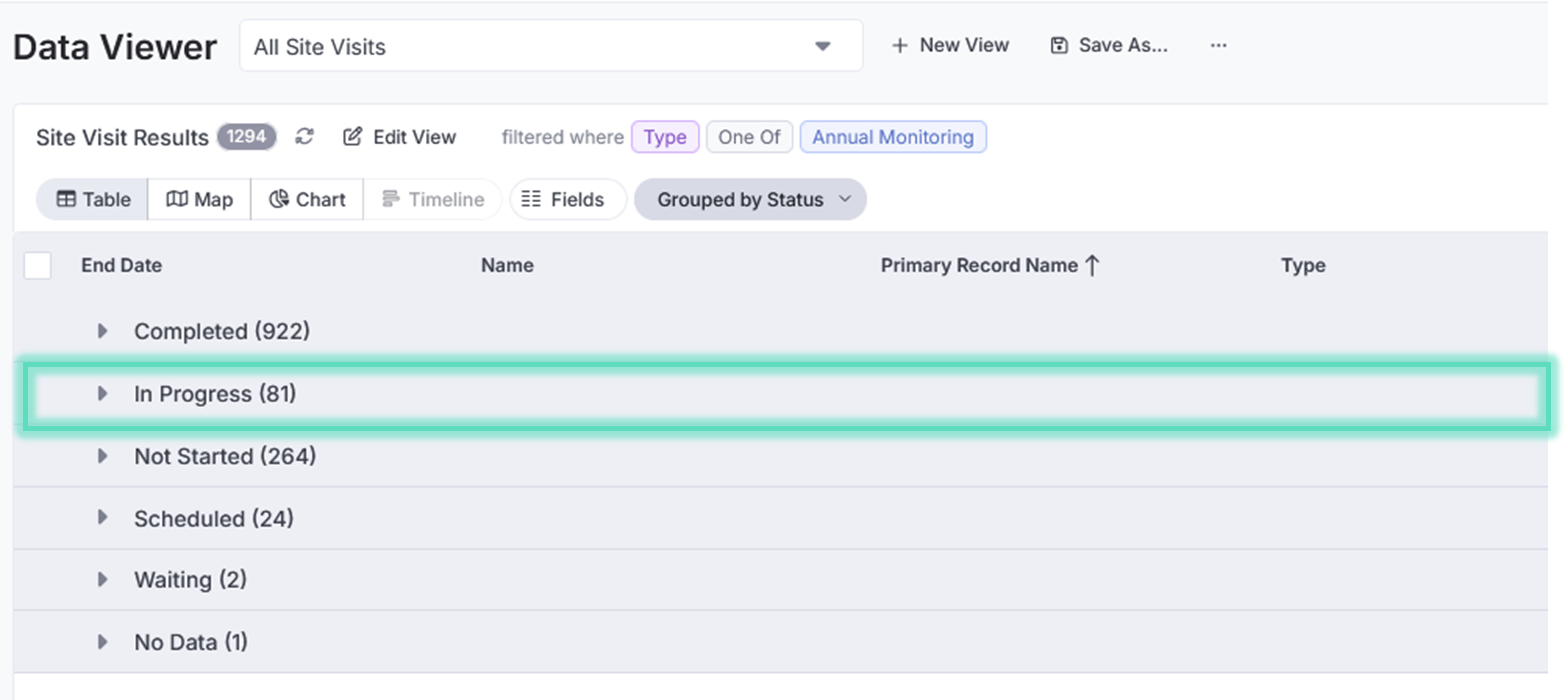
It is important for volunteers to understand that syncing the mobile app does not create the annual monitoring report. If your staff will be responsible for that part of your workflow on behalf of the volunteers, ensure you have steps in place that make it easy for staff to understand which site visits they need to run reports for. A common solution is to use a View of All Site Visits, using the 'In Progress' status as an indication of which site visits might require a report: